- April 9, 2026
- Case Study
Radio Lublin – Unifying Dante, Livewire+, and AES67 for Modern Broadcast Production
Introduction
Producing live radio, podcasts, concerts, and video streams from a single facility requires more than just powerful technology. It requires systems that are stable, predictable, and always available.
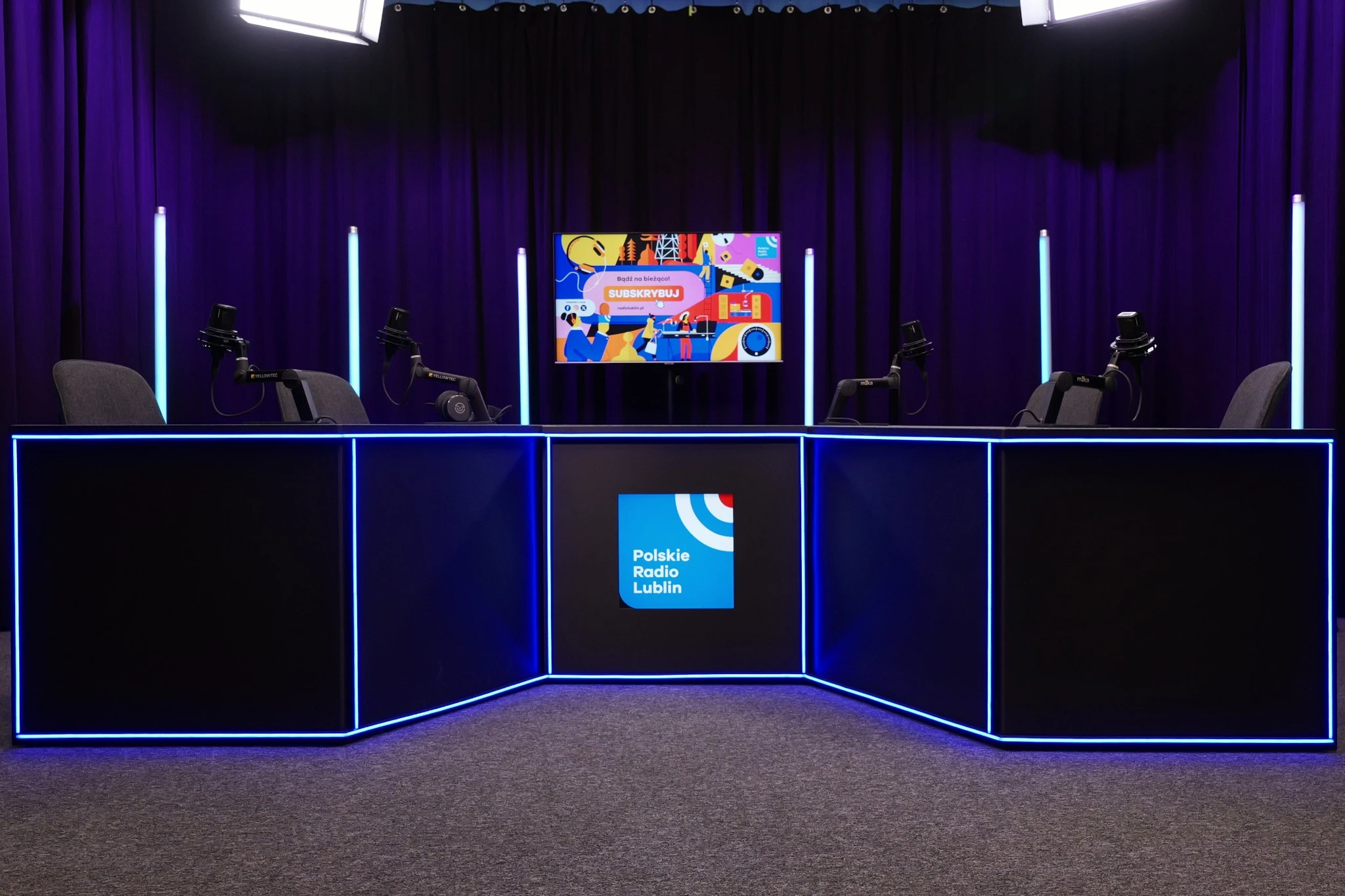
At Radio Lublin, a multi-studio broadcast facility in Poland, audio and video production workflows rely on a complex AoIP infrastructure combining Dante, Livewire+, and AES67.
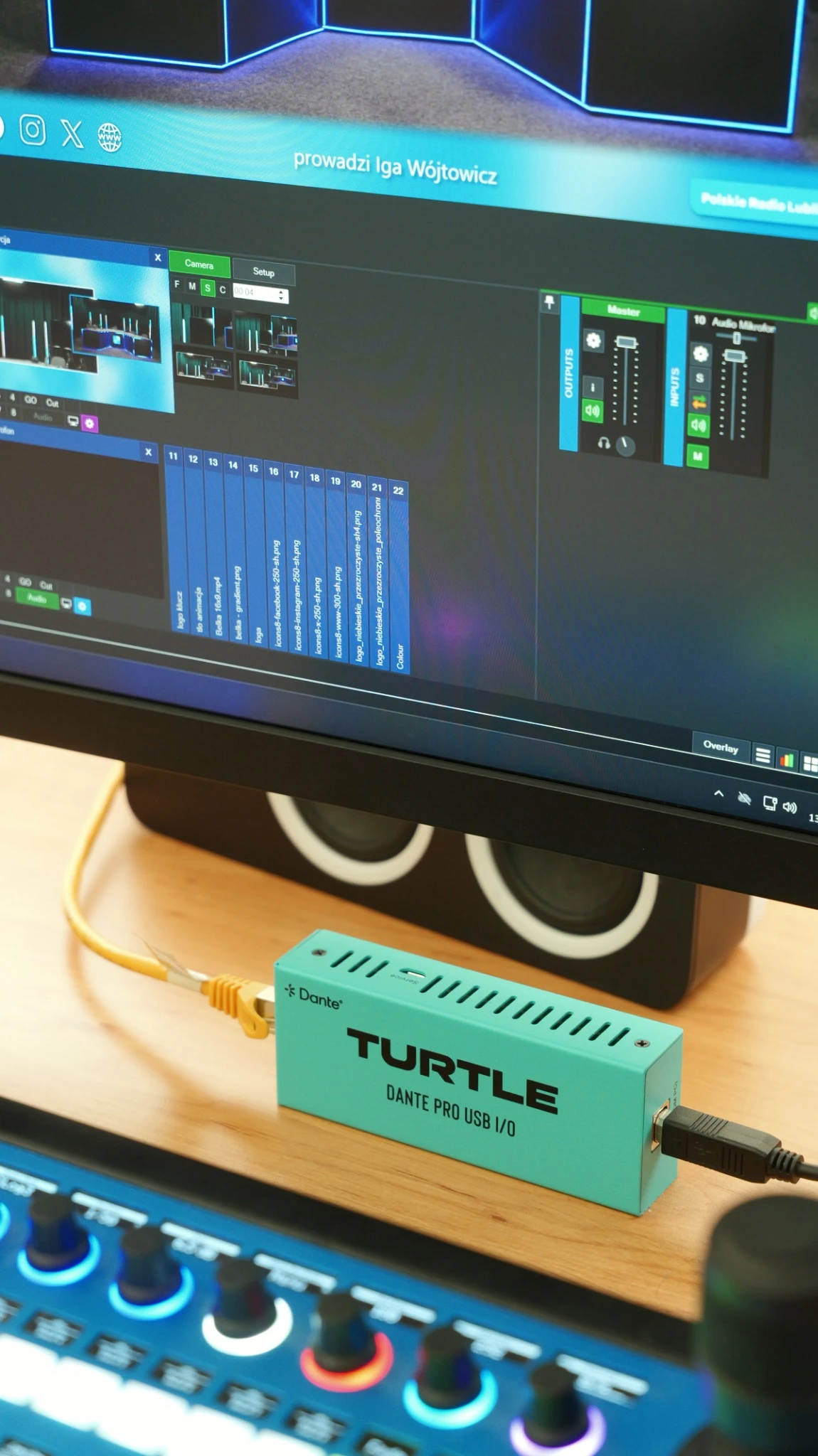
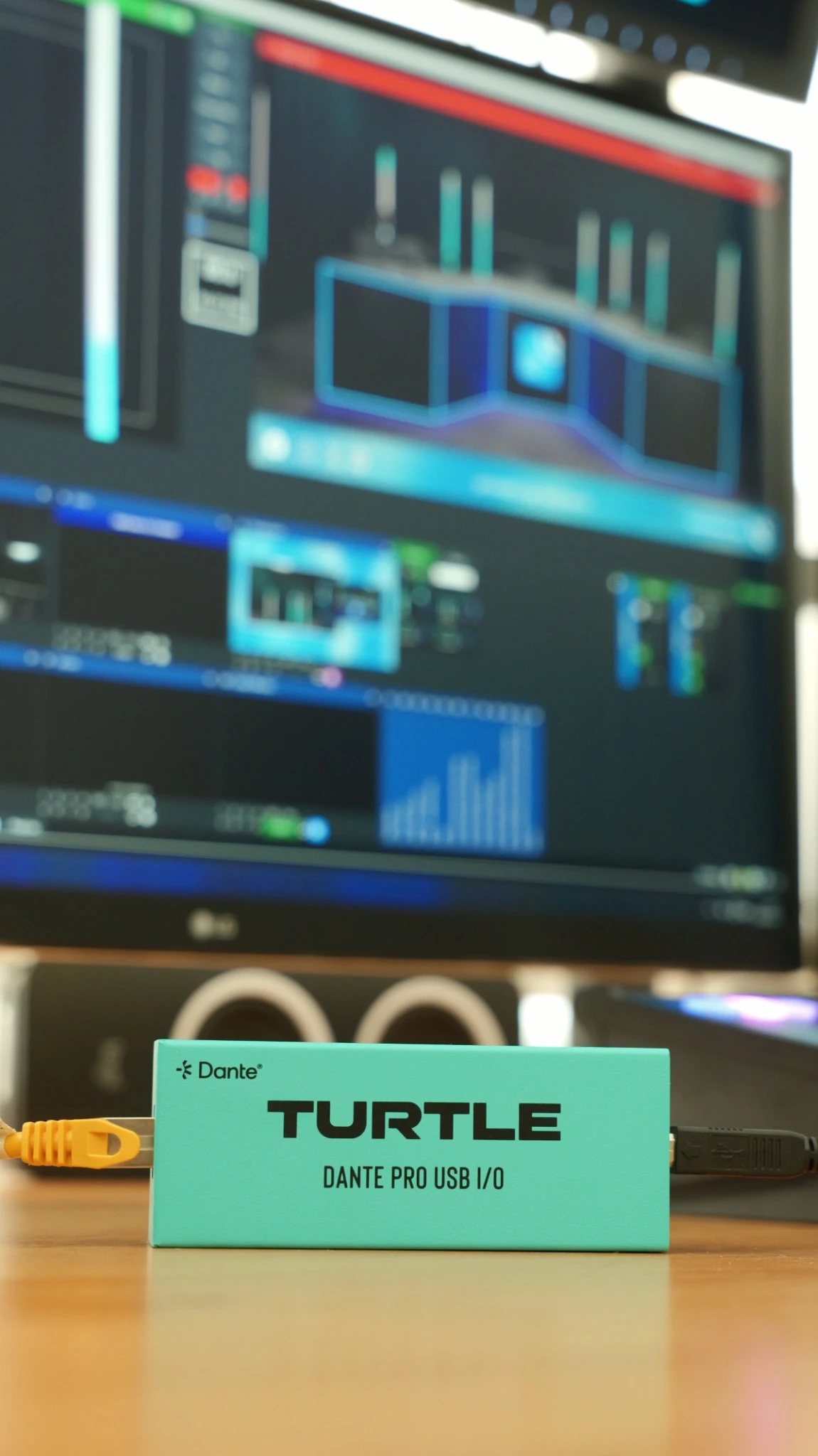
To bridge this network into their video production environment, the team deployed a Turtle AV USB audio interface as a core part of their daily broadcast workflow.
Operating continuously in a system where every signal matters, the requirement was simple. It just had to work.
The Challenge of Hybrid AoIP Broadcast
Radio Lublin’s facility is built around multiple studios, each with its own production requirements and technology stack.
Their environment includes:
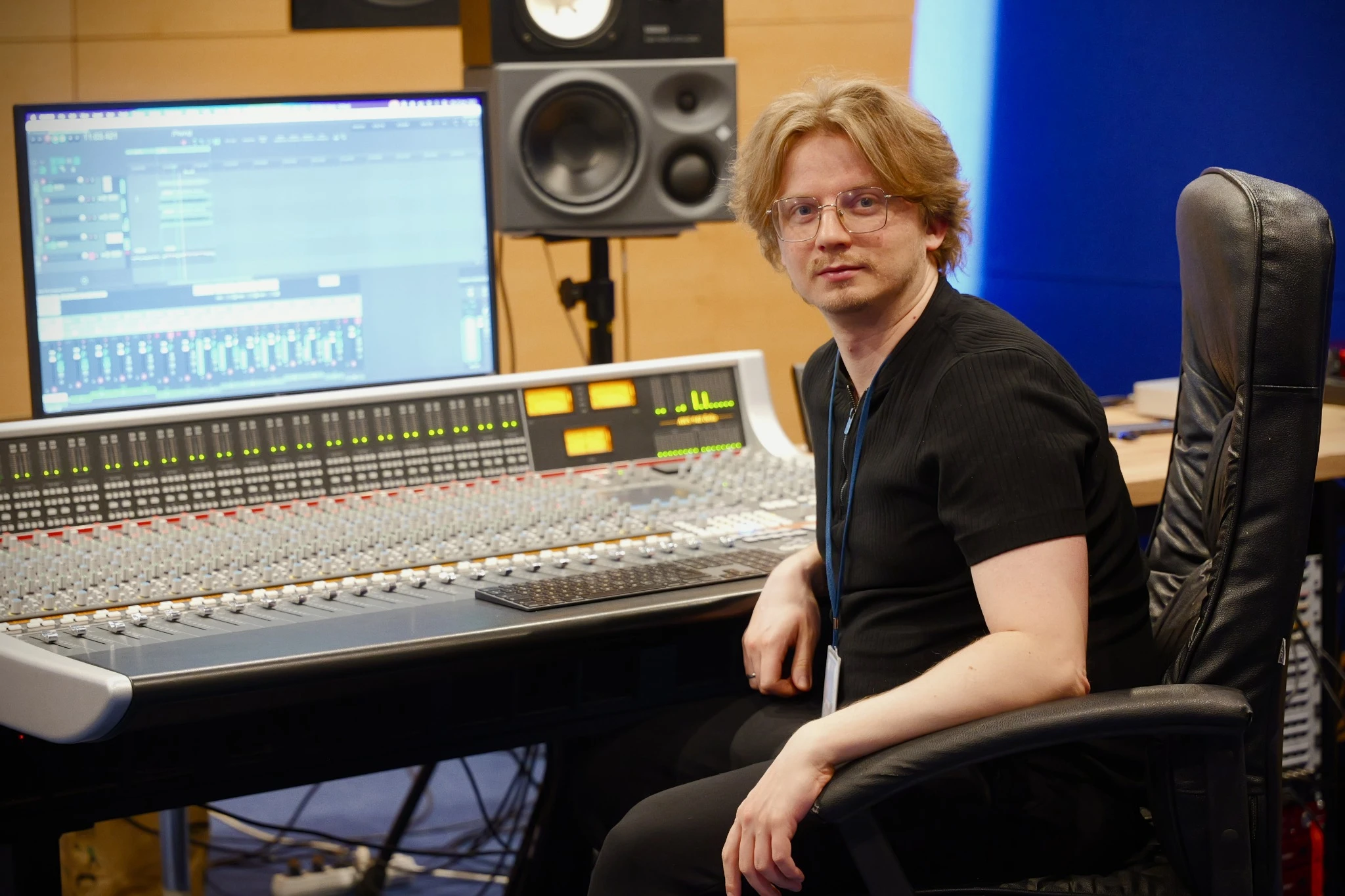
Telos and Axia based live broadcast studios
A Yamaha-based podcast production studio
A Dante-native recording studio using Focusrite RedNet
A live concert space with flexible infrastructure
NDI video across all production environments
All of this is connected through a Cisco Catalyst network with full redundancy and multiple VLANs for Dante, Livewire+, NDI, and technical traffic.
Previously, audio was integrated into the video system using software-based workflows. While functional, it required ongoing management to maintain consistency in a live environment.
Moving to a hardware-based approach with Turtle AV Dante solutions totally transformed the system.
“We found the Turtle AV Dante hardware to be rock solid,” Fryderyk Faluszewski, Radio Systems Specialist at Radio Lublin said. “It has been incredibly stable and predictable, which is exactly what you need for live broadcast and streaming.”
System Design and Signal Flow
The Radio Lublin team designed a workflow that abstracts complexity away from the operator while maintaining full flexibility behind the scenes.
Audio from any studio, regardless of protocol, is routed through an Axia xNode acting as a central routing layer.
From there, a static multicast stream is delivered directly to the Turtle AV interface connected to the main video workstation.
Signal flow:
Studio (Dante or Livewire+) → Axia xNode routing layer → Turtle AV → vMix workstation
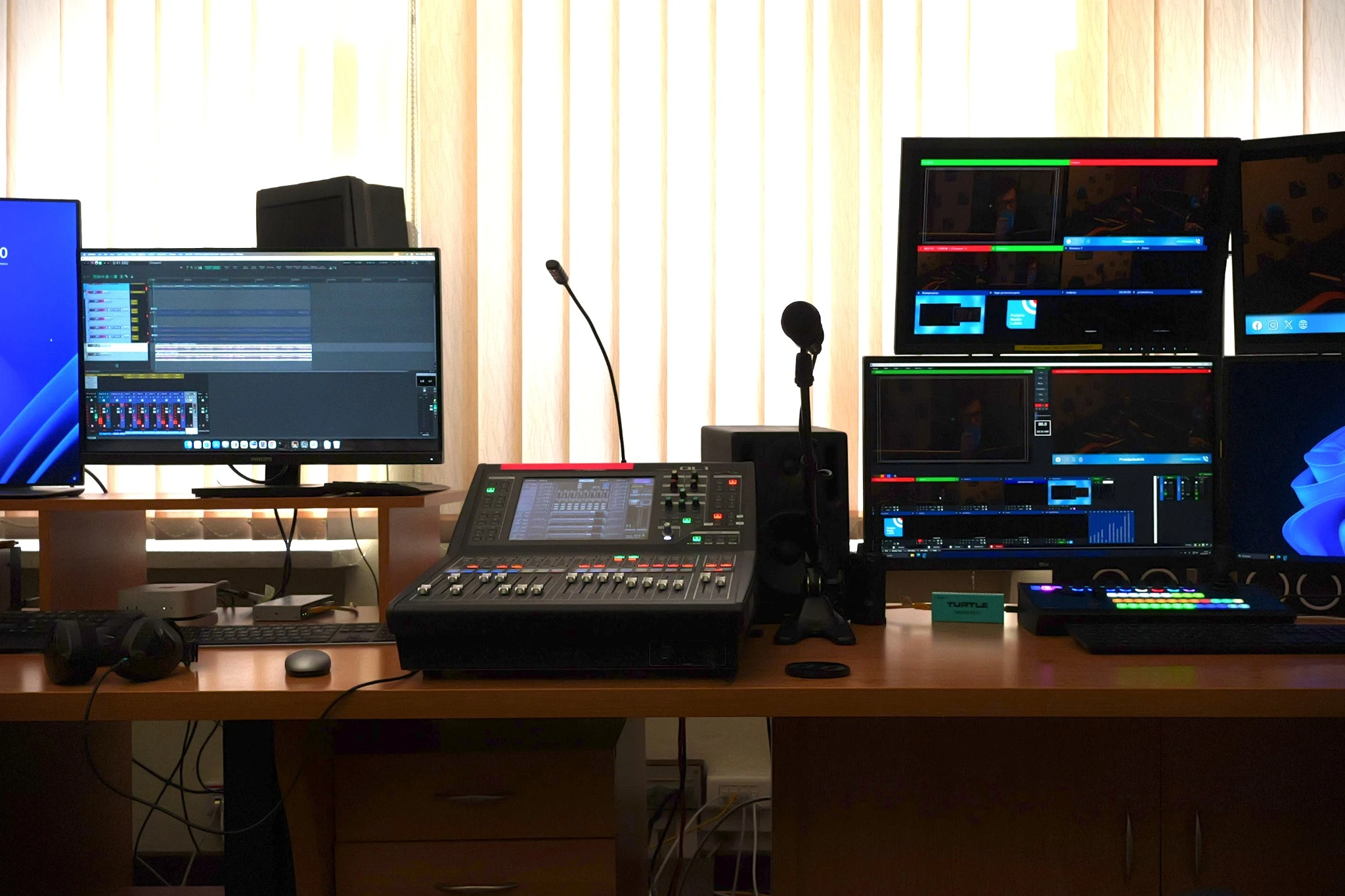
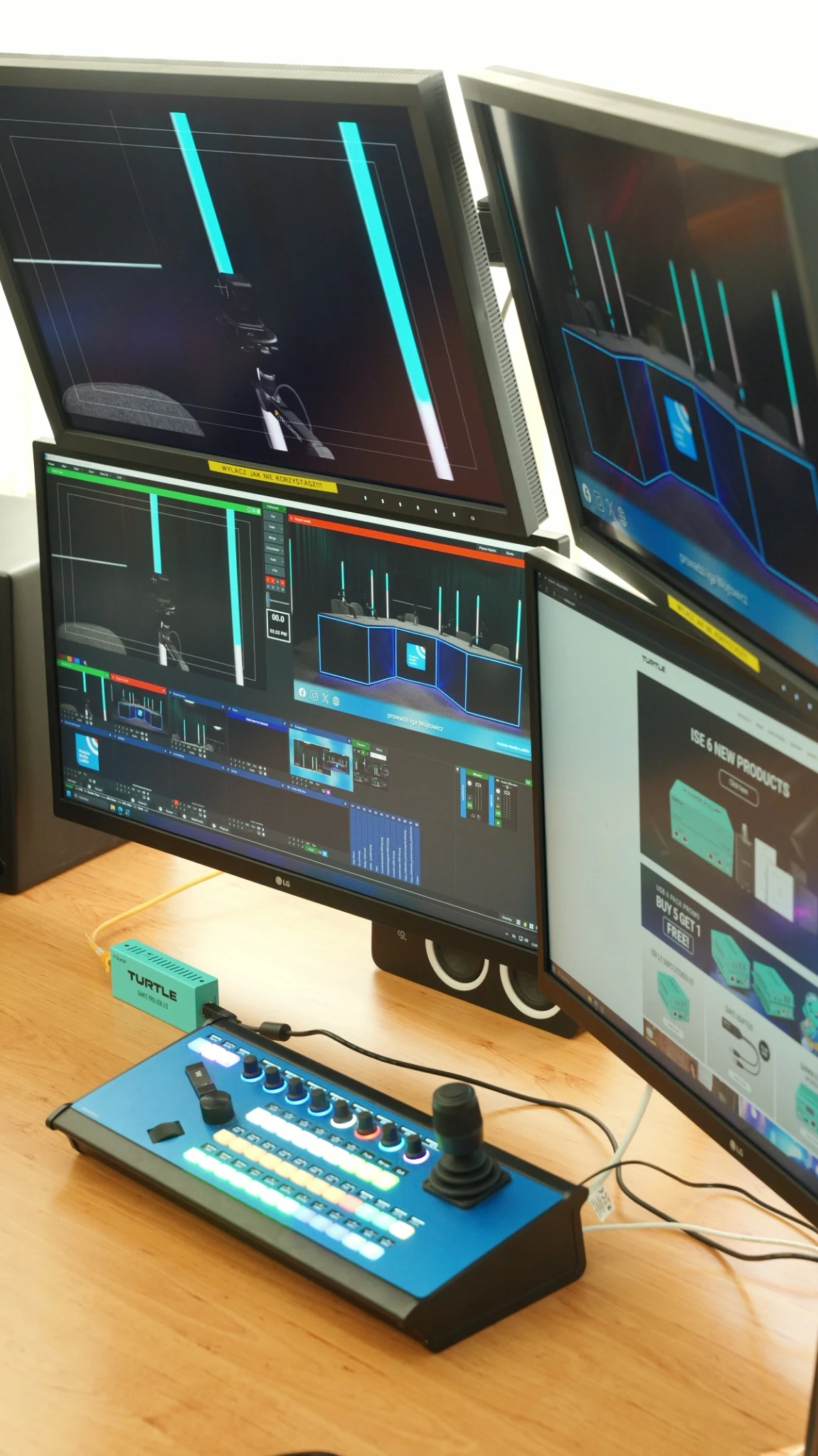
The Dell workstation running vMix acts as the central video hub, with the Turtle interface serving as its only audio input.
This machine operates continuously, handling all video transmissions from the facility.
Built for 24/7 Broadcast Operation
Unlike software-based alternatives, the Turtle AV interface operates independently of drivers or applications.
This was a critical factor in its selection.
“It is a very stable hardware solution,” the team noted. “It just works. We have been extremely happy.”
The system now runs every day with:
No driver conflicts
No jitter or instability
No risk of OS-level interference
Fully predictable performance
In a broadcast environment, that consistency is everything.
Interoperability as a Core Strategy
One of the most powerful aspects of the Radio Lublin system is its commitment to true interoperability across multiple AoIP ecosystems.
Rather than locking into a single vendor, protocol, or standard, the facility brings together:
Audinate Dante
Telos Alliance Livewire+
Audio Engineering Society AES67
This sits on top of a broader ecosystem that includes:
Telos Alliance Axia and Telos broadcast systems
Yamaha Tio stageboxes and QL series consoles
Focusrite RedNet Dante infrastructure
Everything is configured for full AES67 compatibility, allowing these platforms to coexist and interoperate cleanly on the same network.
“The implementation of interoperability between AoIP standards is something we are quite proud of,” Fryderyk said. “It is not unique, but quite uncommon.”
This approach allows Radio Lublin to deploy best in class tools from multiple manufacturers, without compromise and without being locked into a single ecosystem.
Simplifying Complex Workflows
Under the hood, the system is highly sophisticated. For the operator, it is intentionally simple.
Routing is controlled through a custom interface built on Axia Pathfinder, part of the Telos Alliance ecosystem.
From the user perspective:
Select a source
Press a button
Go live
Behind the scenes, the system handles everything:
Switching between Audinate Dante and Telos Alliance Livewire+ streams
Managing AES67-compatible multicast subscriptions
Routing audio through the correct VLAN and network path
Audio is then delivered into the video production environment via Turtle AV into a vMix workstation.
This design deliberately removes the need for operators to interact with Dante Controller or any network level configuration tools, keeping the workflow fast, predictable, and broadcast safe.
Compact, Scalable, and Future Ready
The current system uses a single Turtle AV USB interface as the bridge between AoIP and video, but it sits within a much larger and highly scalable ecosystem.
Video production is built around:
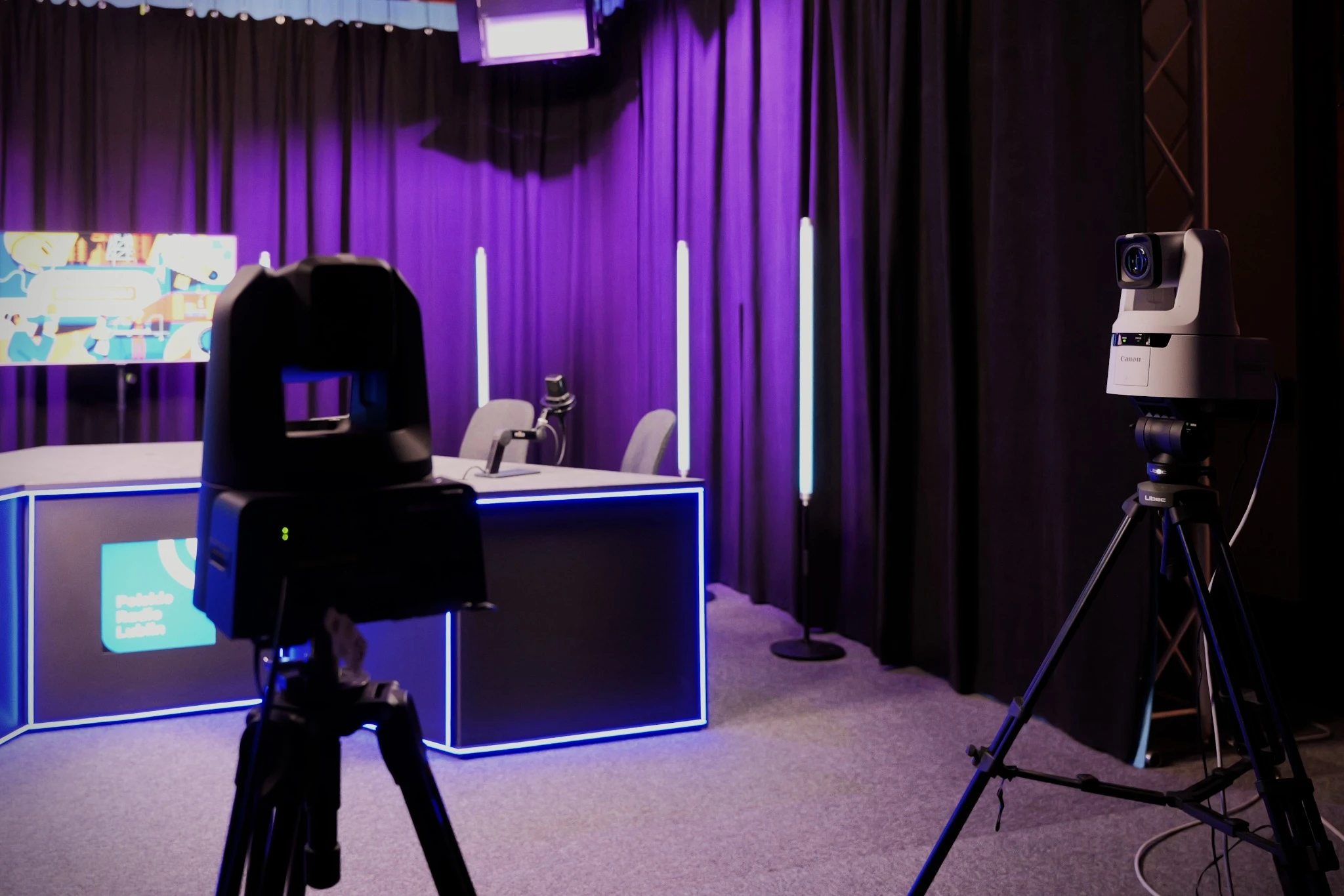
Canon NDI PTZ cameras (N500 and N300 series)
A central vMix production engine
The network backbone is powered by:
Cisco Catalyst switching infrastructure
Looking ahead, the team is planning expansion with:
Additional Turtle AV interfaces for redundancy and playback
Advanced control using Skaarhoj panels
Automation and integration via Bitfocus Companion
Potential evolution of Dante control and monitoring
The architecture is designed to grow without needing to be redesigned.
Production Grade Reliability
At Radio Lublin, the Turtle AV interface is not just another device in the chain.
It is the only audio source feeding the video production system.
That system is responsible for:
Live streaming
Broadcast output
Podcast and content production
In an environment built on:
Audinate Dante
Telos Alliance Livewire+
Audio Engineering Society AES67
Cisco enterprise switching
vMix live production
Reliability is non-negotiable and Turtle has been a solid, reliable, and integral piece of the workflow.