
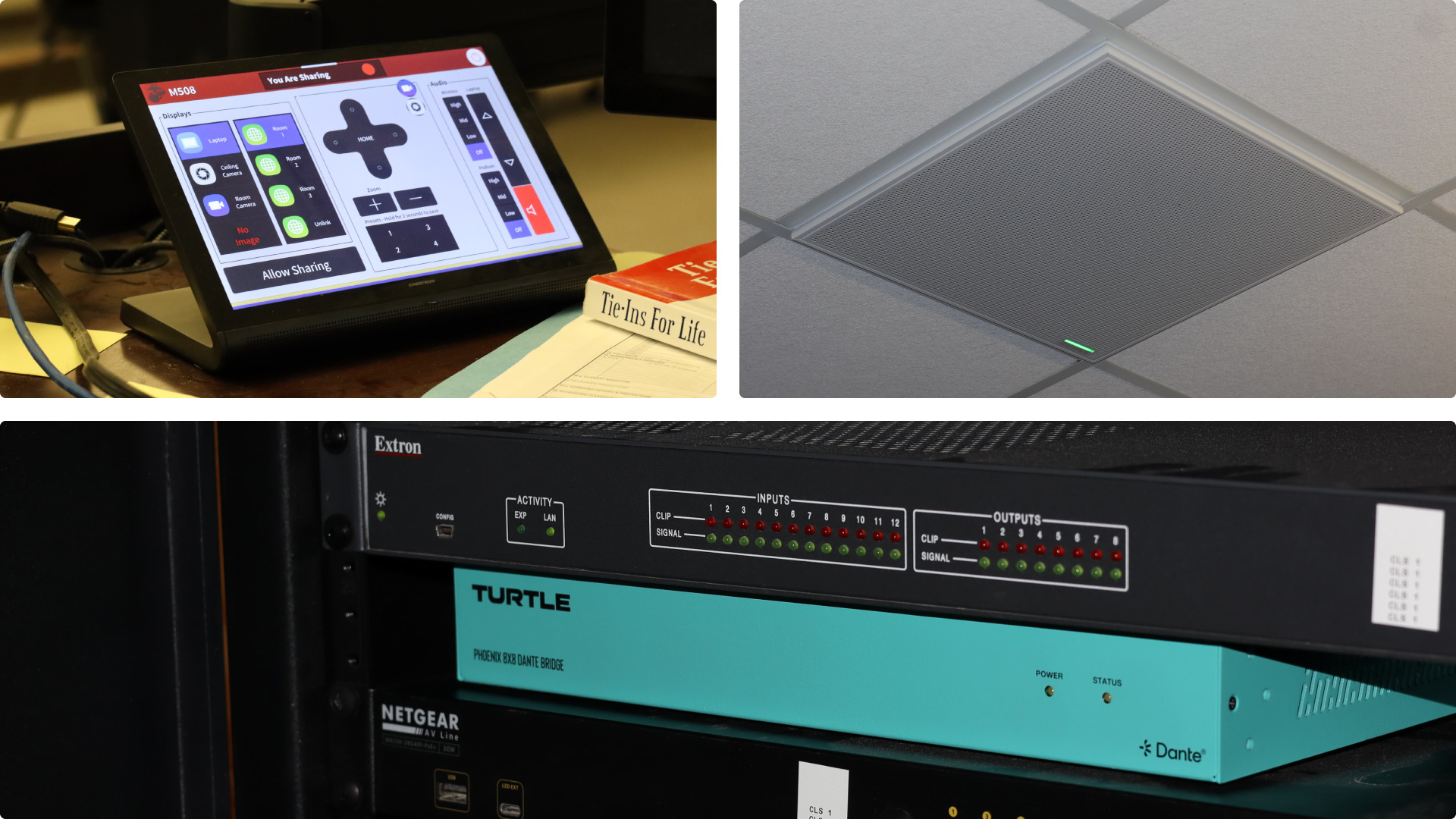
Adding Dante ceiling microphones to an existing analog DSP
How one Phoenix 8×8 brought Dante audio to four classrooms—without replacing the DSP or rewriting the control code.
A four-classroom audio refresh does not always require replacing the system that is already working.
In this project, the existing classroom DSP was analog-only, but the brief called for Shure MXA920 ceiling array microphones with Dante audio. Rather than remove the DSP and rebuild the rooms from scratch, the team used one Turtle AV Phoenix 8×8 Dante audio bridge to connect the new Dante microphones to the existing analog system.
The result: four classrooms gained Dante-enabled ceiling microphones, while the installed DSP, 70V amplifiers, speakers, and control code remained in place.
The challenge with legacy classroom audio systems
Replacing an analog DSP with a Dante-capable model sounds simple—until the wider system is considered. In these rooms, the DSP was already integrated with existing control programming, gooseneck microphones, amplification, and loudspeakers. Replacing it would have added cost, commissioning time, and the risk of rewriting control code that had already been proven in use.
The requirement was to add Dante-enabled Shure MXA920 microphones without disturbing the established room design.
The system
New equipment | 4× Shure MXA920 ceiling array microphones |
Existing equipment | Analog DSP |
How Phoenix 8×8 adds Dante to an analog DSP
Each Shure MXA920 is powered with PoE+ from the Netgear AV Line switch and sends microphone audio onto the Dante network.
- Phoenix 8×8 receives the four Dante microphone channels and converts them to analog outputs.
- Those four outputs connect directly to the analog DSP inputs—one ceiling array microphone per classroom.
- The DSP continues to mix and process audio as before, feeding the existing 70V amplifiers and ceiling speakers.
- Four DSP outputs return to Phoenix 8×8 as analog AEC reference signals. Phoenix places those signals on the Dante network, allowing each MXA920 to receive the far-end audio reference from its own classroom.
Signal flow
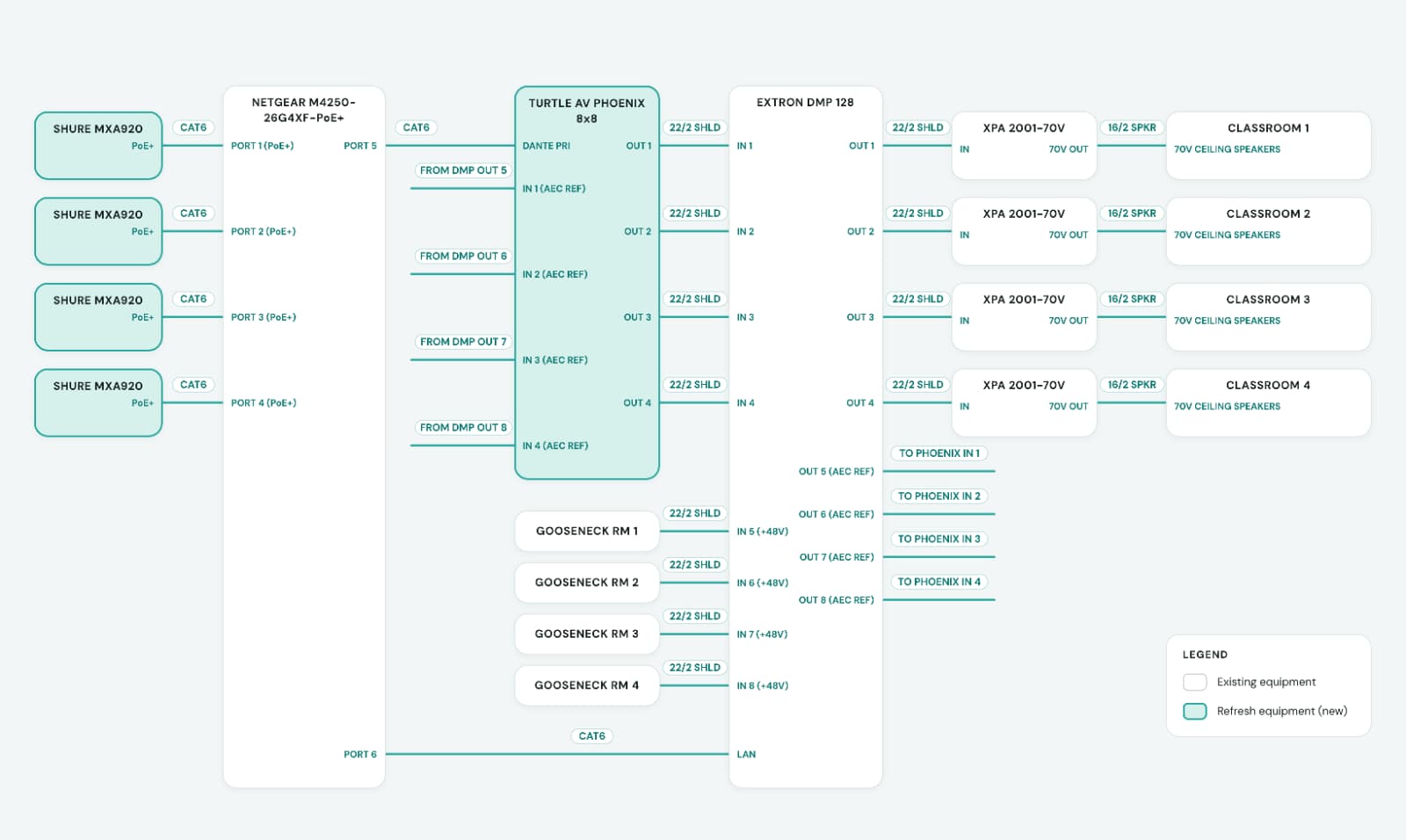 Four Shure MXA920 ceiling arrays connect over Dante to Phoenix 8×8, which interfaces with the existing analog DSP and 70V classroom audio system.
AEC reference on the Dante network
Acoustic echo cancellation is part of the design, not an afterthought. Four DSP outputs return to Phoenix 8×8 as AEC reference signals. By placing the far-end audio on the Dante network, each MXA920 can cancel echo from its own room loudspeakers while the existing DSP remains at the centre of the audio system.
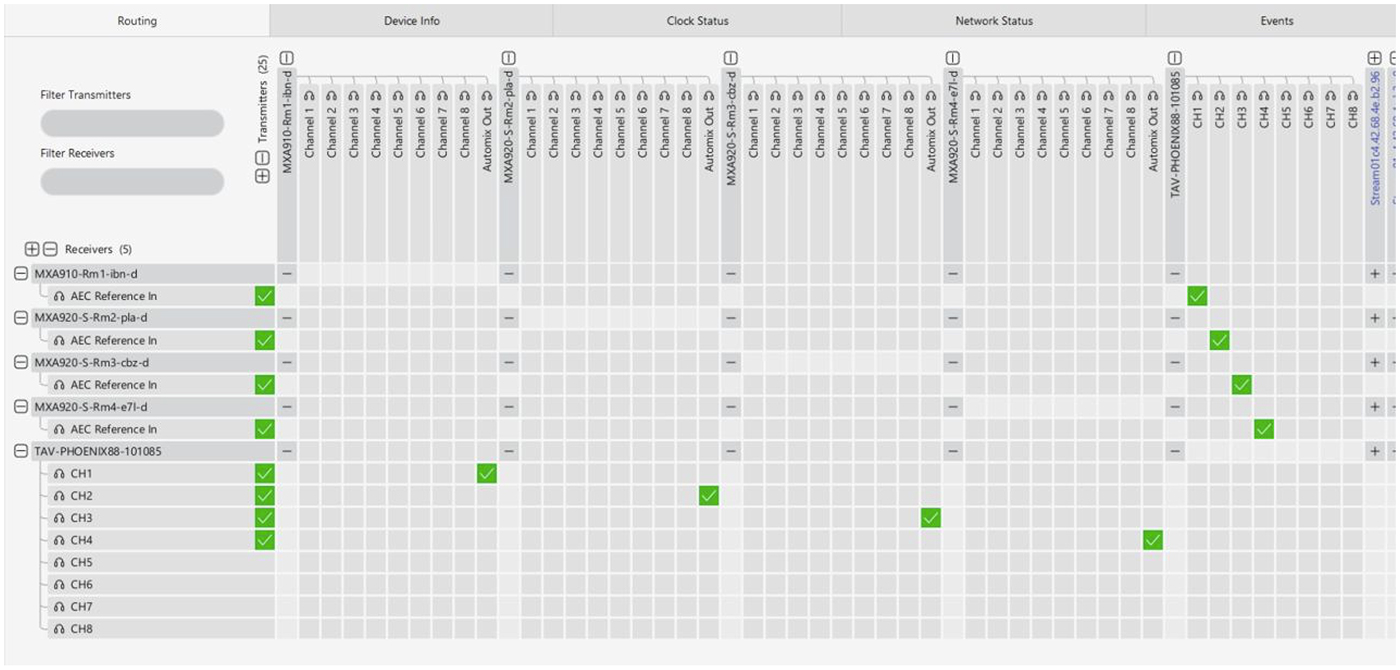 Dante routing confirms microphone audio and individual AEC reference paths for the four classrooms.
A practical Dante retrofit for education spaces
The Phoenix 8×8 acts as the bridge between the existing analog DSP and new Dante devices. The installed system, its control programming, and its proven workflows stay in place, while the new microphones gain networked audio and AEC reference.
It also creates a clearer upgrade path. With Dante now available in the system, future Dante-enabled devices can be added without replacing the core DSP architecture.
For education projects where reliability, cost control, and minimal disruption matter, this is a practical way to bring Dante into an existing classroom audio system.
